Paul, a servant of God and an apostle of Jesus Christ to further the faith of God’s elect and their knowledge of the truth that leads to godliness…
Titus 1:1 NIV
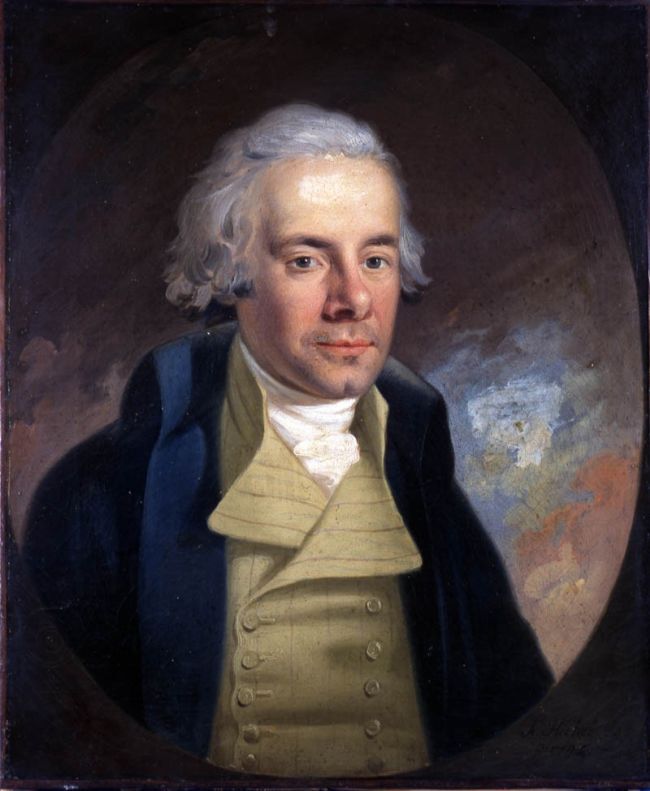
Of all the books I read on my recent months of study leave, the one that stands out most in my mind was one by the famous MP and anti-slavery campaigner, William Wilberforce.
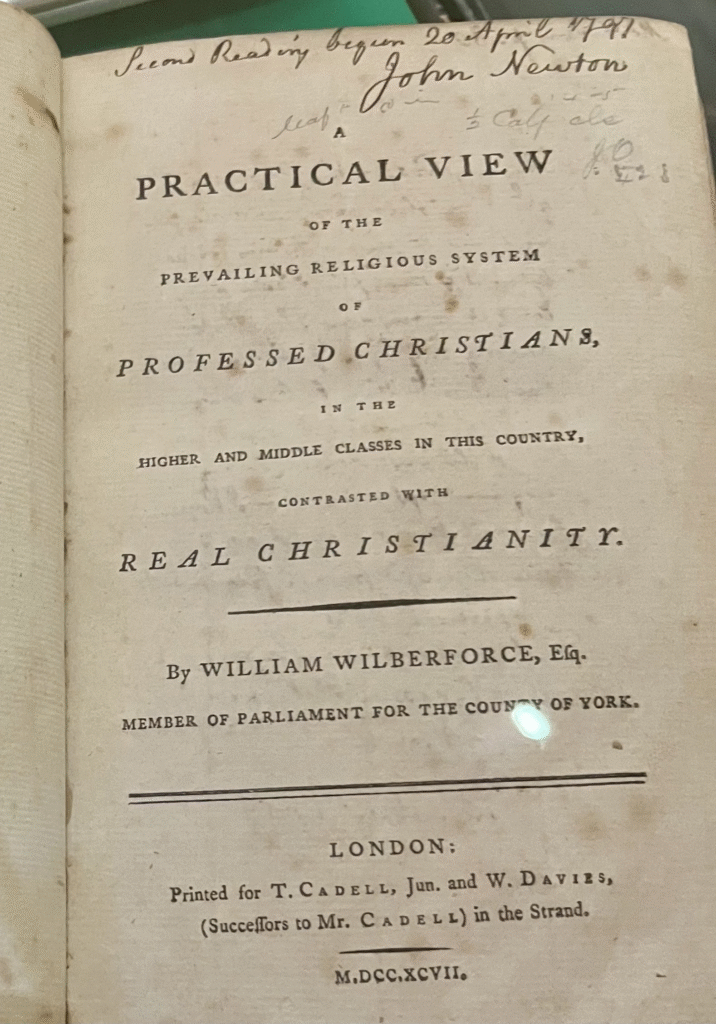
I happened to be with a friend visiting the house of the great poet and hymn-writer William Cowper, which is now a museum of his life and that of his neighbour and pastor, the great John Newton, author of “Amazing Grace”. There in a glass cabinet was Newton’s own copy of Wilberforce’s book, published in 1797.
Newton had been instrumental, under God, in Wilberforce’s conversion to living Christianity, while Wilberforce was a young MP. Newton encouraged Wilberforce to remain in parliament, and supported him in his long campaign (against much opposition) to outlaw the slave trade, culminating in an Act of Parliament in 1807.
This is what Wilberforce is best known for, and which is brilliantly told in William Hague’s enjoyable biography. Less well-known is that he made it his other life’s ambition to recover real Christianity – the Christianity that had changed his life – in this country. This is why he wrote he wrote the book I saw in the glass cabinet.
I haven’t yet mentioned the title of this book, which is extraordinarily long: A Practical View of the Prevailing Religious System of Professed Christians, in the Higher and Middle Classes in This Country, contrasted with Real Christianity.
The book does as its title says. Wilberforce addresses the rife nominalism he encountered among his own contemporaries. He gives a telling illustration of a map we construct for ourselves: certain nasty sins are “out of bounds”, but within the rest we feel free to live as we like. By contrast, real, living Christianity is about a changed heart in which all of life is gladly lived for the Lord God.
How has this come about? Both cause and consequence is a lack of knowledge of the Bible and a troubling carelessness about Christian doctrine. Above all, it’s a nominalism that stems from an ignorant legalism, which assumes that all there is to ‘religion’ is doing certain duties, and hoping for the best that God will cut us some slack.
I’ll mention more next week, because this book is full of the most wonderful nuggets. But one thing that stands out is that all the way through, his answer to nominalism is not “try harder”, but “understand the real gospel”. It is, as Paul writes to Titus (above), their knowledge of the truth that leads to godliness.” This is why we’re having a fresh look at Romans; it is grasping these vital truths that is the heart of real Christianity.